

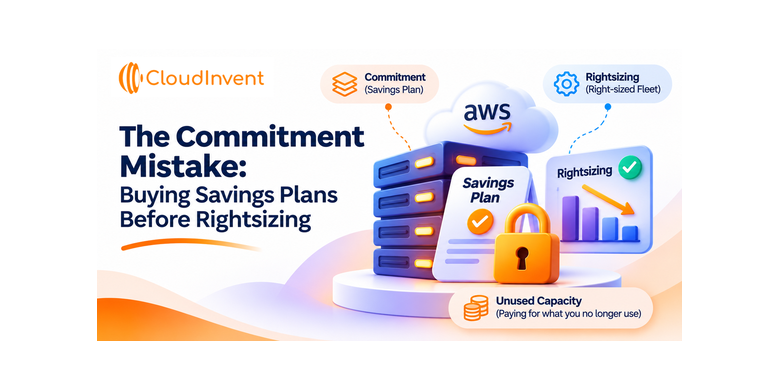
Lower rates don't always mean lower cloud costs: Buying Savings Plans before optimising your infrastructure can leave you committed to compute capacity you no longer need. The smarter approach is to evaluate rightsizing opportunities, existing commitments and future usage together before making a purchase.
The problem is that a Savings Plan commitment does not automatically adjust when your infrastructure changes. If you commit based on your current compute usage and then reduce that usage through rightsizing, the gap becomes unused capacity that you still pay for. What looked like a smart rate-saving decision can turn into avoidable cloud spend. Understanding this gap is the first step towards making commitments that reflect the infrastructure you actually need.
A Savings Plan commitment is designed to deliver lower rates over time, but its value depends on how accurately it matches your actual infrastructure needs. When rightsizing changes your compute usage, an existing commitment may no longer align with your reduced spend. Without considering both together, you risk paying for capacity you no longer need and overstating the savings your optimization efforts deliver. Understanding how these two decisions interact is essential to making smarter commitments and keeping cloud costs under control.