
Skip links

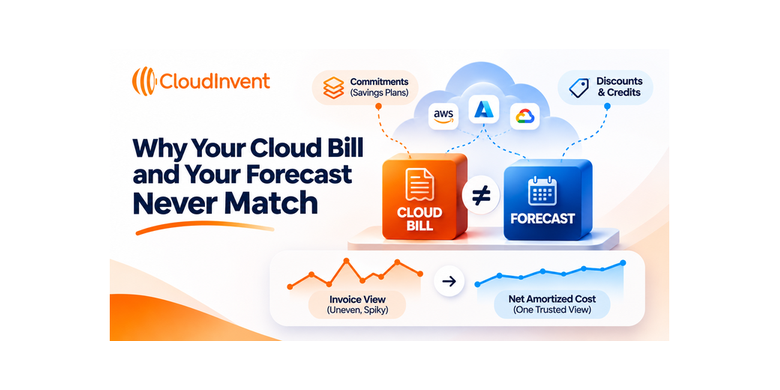
Why Your Cloud Bill and Your Forecast Never Match

November 5, 2026

Your cloud bill and your forecast rarely match because they measure different things. The bill shows what was invoiced, with upfront payments and discounts landing when they happen. The forecast assumes steady usage at a steady price. Net amortized cost closes the gap by spreading commitments across the usage they cover and applying discounts.

Three reasons the numbers drift

01. Commitment payments land unevenly.

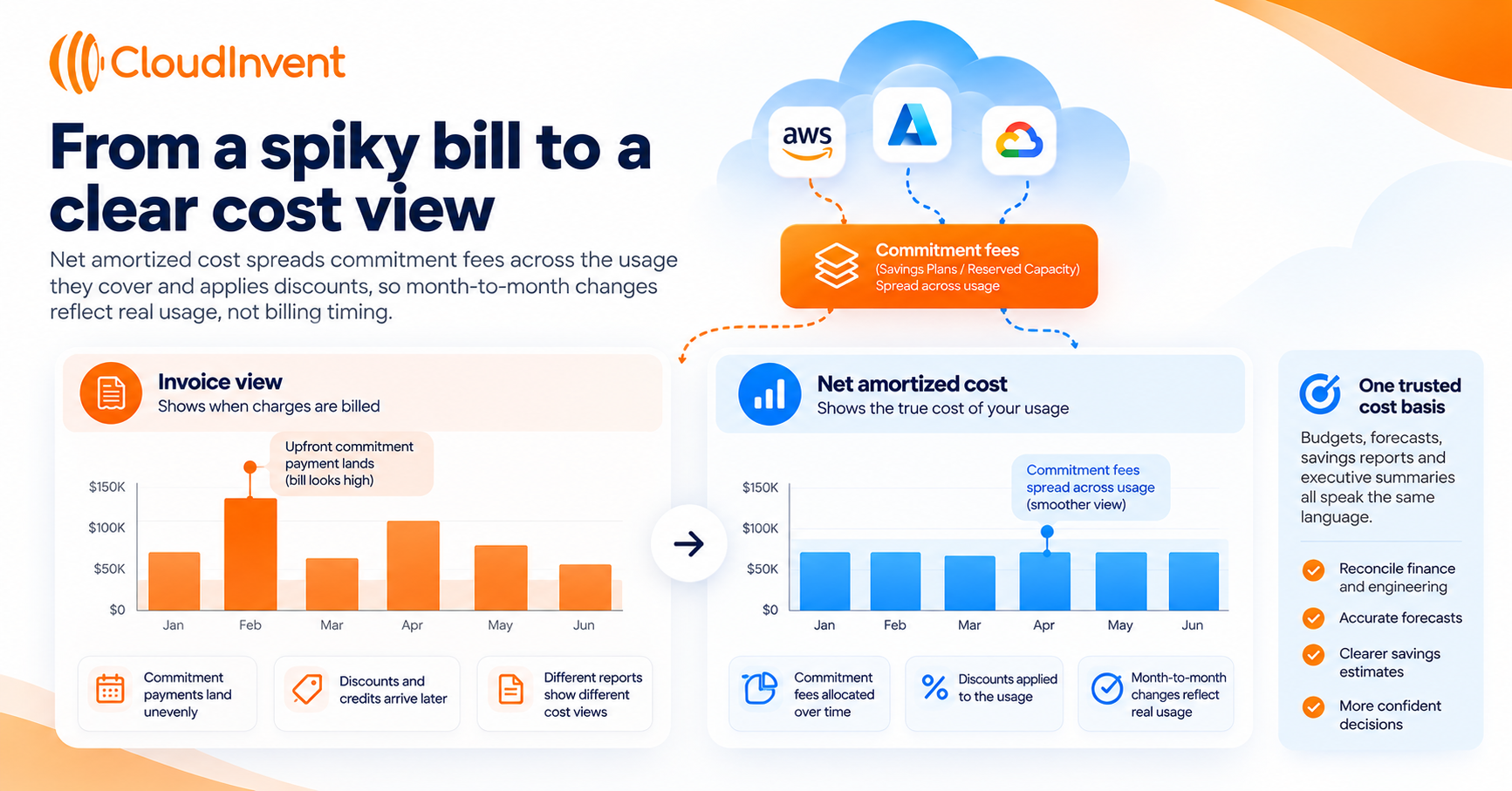
Savings Plans and similar commitments can involve upfront or recurring fees that do not line up with the usage they cover. In the month a payment lands, the bill looks high. In other months it looks low. Neither month shows what the workloads really cost.

02. Discounts and credits arrive on their own schedule.

Negotiated discounts, credits and refunds often appear after the usage they relate to. A forecast built from last month's invoice inherits that timing noise.

03. Different reports use different cost views.

One dashboard shows list price. Another shows the invoice view. A third shows an amortized view. When finance, engineering and FinOps each pull from a different one, nobody's number is wrong, but nobody's number agrees.

What net amortized cost does

Net amortized cost is the cost of your usage after discounts, with commitment fees spread across the usage they cover. It answers the question a CFO actually asks: what did this workload cost us, all in?Because commitment fees are spread over time and discounts are applied to the usage they belong to, month-to-month swings reflect real changes in usage, not billing timing.
Comparison of invoice view and net amortized cloud cost

Conceptual illustration: invoice timing versus a net amortized view. Actual cost patterns vary by account, commitment and usage.

The key distinction: an invoice tells you when charges were billed. An amortized view helps you understand the cost associated with the usage over the period it was consumed.

Why one cost basis matters

The biggest problem is rarely the number itself. It is that several numbers are in circulation. When an engineering lead reports savings on one basis and finance reviews spend on another, the savings never reconcile and trust in the whole programmed drops. Using one basis everywhere fixes that. Forecasts, budgets, savings estimates and executive reports all speak the same language.

How CloudInvent applies it

CloudInvent uses net amortized cost across inventory, savings analysis and the Executive Summary. That means the cost you see for a resource, the savings we estimate for it, and the figure your leadership reads all come from the same basis. It also underpins our AWS compute rate optimization. Savings Plan recommendations account for rightsizing and for unused Savings Plan capacity, and the resulting rate savings appear in the Executive Summary on the same basis as you spend.
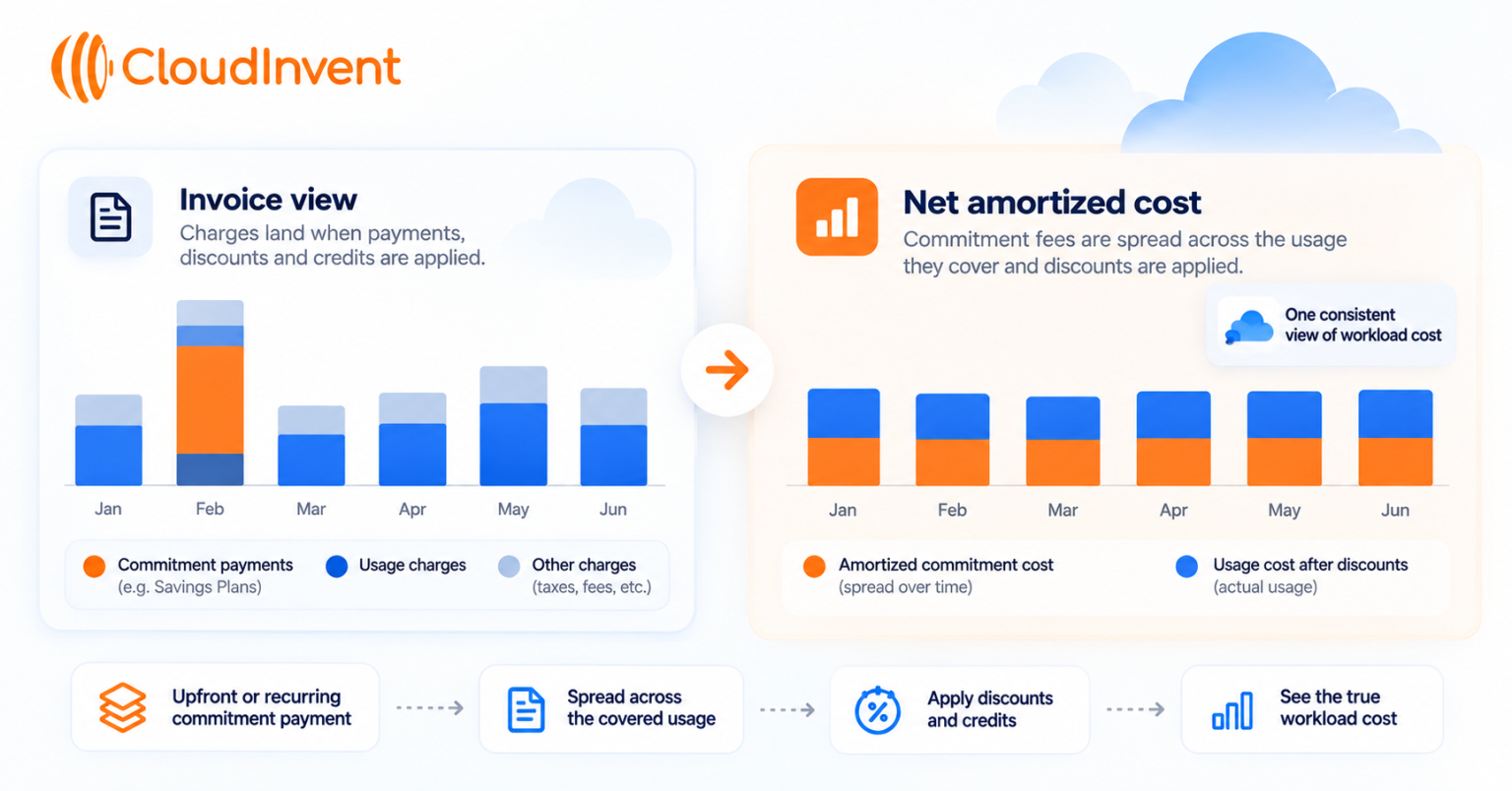
Cloud Cost Amortization Overview

It also underpins our AWS compute rate optimization. Savings Plan recommendations account for rightsizing and for unused Savings Plan capacity, and the resulting rate savings appear in the Executive Summary on the same basis as your spend

Four steps to start

1

Choose one cost basis

For all internal reporting and write it down.

2

Apply it everywhere

Use it in dashboards, budgets, savings reports and board packs.

3

Reconcile once a month

Compare against the invoice so everyone understands the difference between billed and amortized.

4

Forecast from the amortized view

Build forecasts from the amortized view, not directly from invoice timing.

Frequently asked questions

What is net amortized cost?

Net amortized cost spreads commitment fees across the usage they cover and applies relevant discounts and credits. It provides a more consistent view of cloud spending over the period in which resources are consumed.

Does it change what I pay?

No. Net amortized cost is a way of viewing and allocating cloud costs. It does not change your actual cloud bill or payment obligations.

Why not just use the invoice?

An invoice shows when charges were billed. It may not show how commitment payments, discounts and credits relate to usage over time. An amortized view helps teams understand that relationship and build more consistent forecasts.

See your spend on a net amortized basis.

Bring finance and engineering onto one clearer view of cloud cost.

Book a Demo